
When you compare internet plans, it's easy to get caught up in speed numbers. Faster sounds better, and providers often make it feel like speed solves everything. However, if you're using an internet-based home phone service, raw speed isn't usually the main factor affecting call quality. What matters most is whether your connection stays steady throughout the day.
You can have a very fast plan and still deal with choppy calls if your internet drops for a few seconds here and there. On the other hand, you can have a low-cost home phone service that delivers clear calls consistently if your connection stays stable.
You may not need to pay extra for top-tier speeds to get good calling, which is good news if you're trying to keep costs reasonable. You may benefit more from a dependable connection that stays online, especially during the hours you actually use your home phone.
Why "Fast" Doesn't Always Mean "Clear"
Internet speed is about how much data your connection can move at once. That matters a lot for heavy activities like streaming in high definition or downloading large files. A phone call uses much less data. As long as your connection can handle basic daily internet use, it can usually handle calling too.
Call clarity depends more on consistency than on having extra capacity. If your internet speed is high but the connection is unstable, your call can cut out or sound robotic. Even a short hiccup can create a noticeable glitch because you need a steady stream to carry the conversation smoothly.
It also helps to remember that most speed tests don't detect consistency issues. You might run a test and see great numbers, then still have trouble later when your network is busier. A stable connection shows up in your everyday experience, not just in a quick test result.
Why Reliability Is the Real Key for Home Phone Calls
Having reliable internet means it stays connected without frequent dropouts. If your connection holds steady, your calls tend to sound clear and natural. If it drops often, your call quality suffers no matter how fast your plan is.
You've probably seen this happen in real life. Your streaming might recover quickly after a brief pause, but phone calls don't catch up the same way. You can miss words or lose the thread of the conversation. A reliable connection lets you communicate clearly and consistently without worrying about something getting lost in transit.
What Causes Dropouts in the First Place
Dropouts can happen for a few common reasons, and you don't have to be a technical person to recognize them. The biggest clue is timing. If your internet acts up at the same times each day, congestion or local network load may be part of the issue. If it happens randomly, your router placement or service quality may be the bigger factor.
Wi-Fi can also play a role. If your signal is weak in the area where you use your phone service, you may experience more interruptions. Thick walls, long distances, and crowded neighborhoods can all interfere with Wi-Fi performance. The connection may still technically work, but it may not be steady enough to keep calls smooth.
Weather and local disruptions can also contribute. If you notice more issues during storms or high winds, your service may be more sensitive to outside conditions. Even brief disruptions can affect call clarity.
What You Can Do Before Paying for More Speed
When you're having issues with your home phone, upgrading your internet plan can feel like the easiest answer, but it's often worth checking a few basics first. These small steps often make a bigger difference than jumping to a higher-speed package.
Check your router placement.
If your router is tucked in a corner or behind furniture, you may get a weaker signal in the rooms you use most. A more central location often improves consistency throughout the home.
Pay attention to timing.
If your connection drops at the same times each day, your network may be strained during peak hours. Knowing this helps you identify the cause of your issue and work around it or decide if a different plan or provider is worth exploring.
Restart and update when needed.
Routers can slow down over time, and a quick restart can help. If your equipment is older, replacing it can also improve stability even if your speed stays the same.
How to Tell If Your Internet Is Stable Enough for Calling
You can notice stability issues through simple patterns. Do you regularly have to reconnect devices? Do video calls freeze often? Those are signs that your issue is reliability rather than speed. If your internet stays connected throughout the day and allows streaming without constant buffering, it's probably stable enough for clear calling.
If your household can handle basic online activity without frequent interruptions, your home phone calling experience is likely to be smooth. If you're dealing with repeated drops, focusing on connection quality makes more sense than chasing higher speed numbers.
Why You Can Save Money When You Focus on Reliability
When you understand that calling relies on stability more than raw speed, you can make smarter choices. You may be able to stay on a reasonably priced internet plan and still get clear home phone calls.
For many use cases, a stable mid-range plan can comfortably cover your needs. You can get better value by prioritizing a consistent connection over maximum speed.
Focusing on your actual needs also helps you have more productive conversations with internet providers. You can explain that your issue is dropouts and stability rather than simply asking for more speed. That shifts the focus toward solving the real problem.
What to Keep in Mind for a Smooth Home Phone Experience
If there's one central takeaway, it's that a clear call depends on a steady connection. When your internet stays consistent, your calling experience stays consistent. You don't need to chase the highest speed tier to get that result.
The next time you search "home phone service in my area", ask yourself which provider or setup can give you fewer interruptions. Pay attention to how your internet behaves during peak times, storms, or busy household hours. Those patterns often reveal more than a speed test.
When you build your home phone setup around reliability, you end up with calls that feel dependable and natural. Your phone service does what it's supposed to do: keep you connected without becoming another thing you have to manage.
MONEY BACK GUARANTEE

SMS to Email
Announcements
Voicemail to Email
Call Forwarding
Toll Free / Vanity Number
or call (844) 843-4175
MONEY BACK GUARANTEE
Free Desk Phone
Desktop & Mobile Apps
Local and Toll Free Numbers
Voicemail to Email
Text Messaging
Unlimited Calling
or call (844) 843-4174
MONEY BACK GUARANTEE

No Apps. No Texts. No Distractions.
No Strangers Allowed
Quiet Time Protected
Unlimited Calling
Emergency-Ready
or call (844) 843-4175
MONEY BACK GUARANTEE
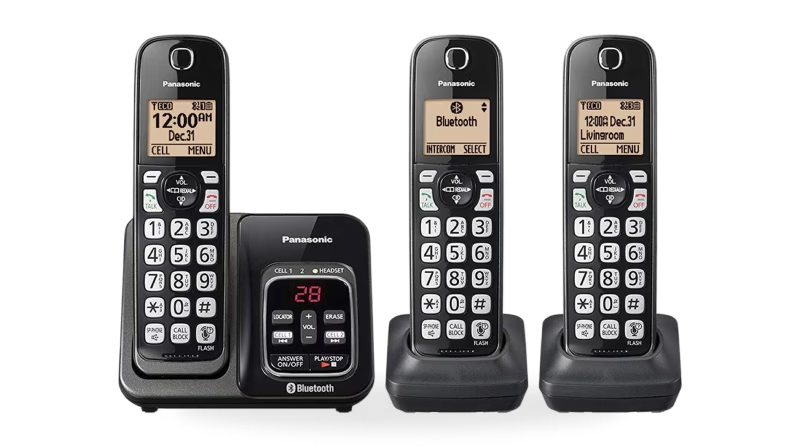
Unlimited phone service
Keep your existing number
Free adapter & free shipping
No contracts/setup fees
Use existing analog phone
or call (844) 843-4175
MONEY BACK GUARANTEE
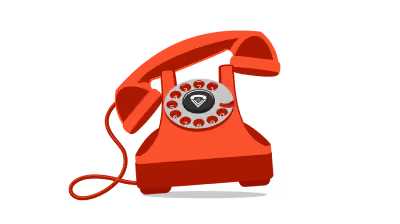

Unlimited Phone Service
Keep Your Existing Number
Free Adapter, Free Shipping
No Contracts/Setup Fees
Use Existing Analog Phone
or call (844) 843-4175
MONEY BACK GUARANTEE
Desktop and Mobile App
Email To Fax
Dedicated Fax Number
Easily Fax Documents
No Contracts/Setup Fees
or call (844) 843-4175
MONEY BACK GUARANTEE
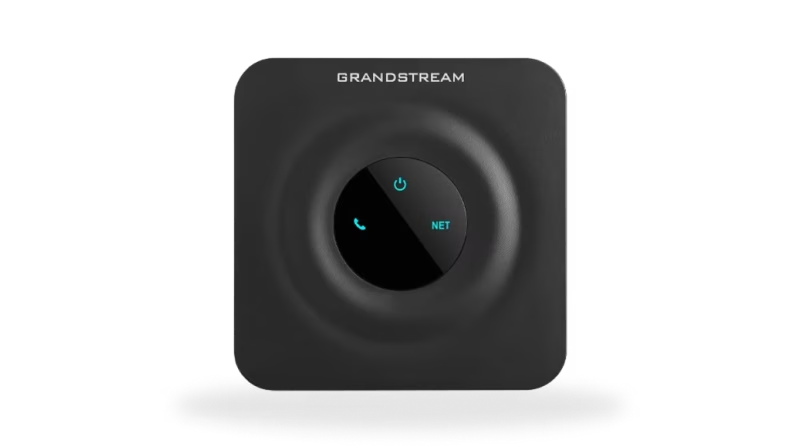
Flexible Plans
Everywhere Connectivity
High-Speed Internet on the Go
Reliable Internet Connection
Easy Setup and Access
or call (844) 843-4175