If you only use a home phone for part of the year, a full-year contract can feel wasteful. You may spend winter at a second home or stay in one place only during harvest season. In those situations, the question is simple: how do you keep a reliable home phone service without paying for months of service you do not need?
The answer starts with flexibility. A part-year home phone setup should let you turn service on when you arrive and avoid paying for inactive months. That gives you the benefit of a real home phone when the home is occupied, without carrying unnecessary costs through the rest of the year.
This issue is about far more than convenience. A home phone is useful for family check-ins, local service calls, appointment reminders, and emergency access. If you need that support only for part of the year, your service should align with how you actually live.
Why Full-Year Pricing Stops Making Sense
Many traditional home phone plans assume you need service every month, no matter what. That works for a primary residence. It works poorly for a seasonal home or temporary stay. If the property sits empty for long stretches, the monthly bill becomes harder to justify.
That is especially true if the plan comes with fixed fees, taxes, or equipment charges. You may only need the service for a few months, yet you end up paying all year to hold onto a number you barely use.
A more flexible setup helps you avoid that mismatch. You align the service with your schedule instead of forcing your schedule to fit the plan.
Why a Home Phone Still Helps in a Seasonal Home
Even if you only live in a home for part of the year, a home phone can still be useful while you're there. It gives you one clear number tied to that location. Neighbors, local doctors, repair services, and family members can all use the same number to reach you.
That stability is helpful in second homes and short-term living situations because it maintains consistency. You may be in a different place, but a home phone means you still have one dependable point of contact while you are settled there. If you are coordinating deliveries, contractors, or property maintenance, that can make daily communication easier.
It also gives you a more comfortable setup for older family members who prefer a familiar home phone instead of relying fully on mobile devices.
What to Look For in Part-Year Service
If you only need service for a few months at a time, focus on practical terms rather than flashy features. The best plan is the one that fits your schedule without creating more work.
Look for flexible home phone plans that offer:
- month-to-month billing instead of long contracts
- the option to pause, cancel, or restart without penalties
- a clear way to keep your number without paying year-round
Those details matter more than extras. You want predictable costs and simple account control. If the process feels hard to manage, the service stops being flexible in the way you actually need.
The Consistency of Keeping Your Number
If you return to the same home every year, keeping the same number can make life much easier. Friends, relatives, service providers, and local contacts already know it. You don't have to send updates every season or wonder who still has the old number saved.
That consistency also helps with practical tasks. If you call the same pharmacy or utility office during part of the year, using the same number each season removes confusion. It keeps the setup familiar and reduces extra admin work when you arrive.
This is one of the biggest advantages of flexible service. You can step away from the home for months and still avoid starting from scratch when you come back. A service that lets you hold on to your number, without paying service fees as though the line were active, gives you consistency and stability.
Avoid Paying for Time and Features You Do Not Use
The main goal is simple: pay for what you will actively use, not empty months. That means checking the billing terms before you sign up and making sure you understand how the service starts, stops, and resumes. A low monthly rate can still cost far more than necessary if the plan expects you to keep paying all year.
Before you choose a plan, think about what the phone needs to do while you are there. Some households use it mainly for incoming calls from family. Others need it for local appointments, emergency communication, or property-related coordination. Identifying what you need out of your part-year phone service beforehand can help you avoid overpaying for unnecessary bells and whistles.
A good flexible setup gives you reliable access to what you need while the home is occupied and lets you step back cleanly when it's not.
Match The Service To The Way You Live
Part-year living calls for part-year thinking. If you only need a home phone during certain months, you do not need to force yourself into a plan built for year-round occupancy. A flexible setup keeps costs more reasonable and makes the service easier to manage.
That approach works well for seasonal homes, snowbird residences, and other temporary stays because it respects the way you actually use the property. You stay reachable when you're there. You avoid extra costs when you aren't. You keep the benefits of a home phone without dragging unnecessary service through the off-season.
If you are comparing options now, focus on factors like billing flexibility and the ability to keep your number through inactive periods. Prioritize plans that fit how you'll use the line. Those are the details that make part-year phone service feel practical instead of frustrating.
Infographic
For anyone who only lives in a home part of the year, a traditional full-year phone plan creates an obvious mismatch between the service you're paying for and the life you're actually living. Check out this infographic to discover six important things to know about part-year home phone service.

MONEY BACK GUARANTEE
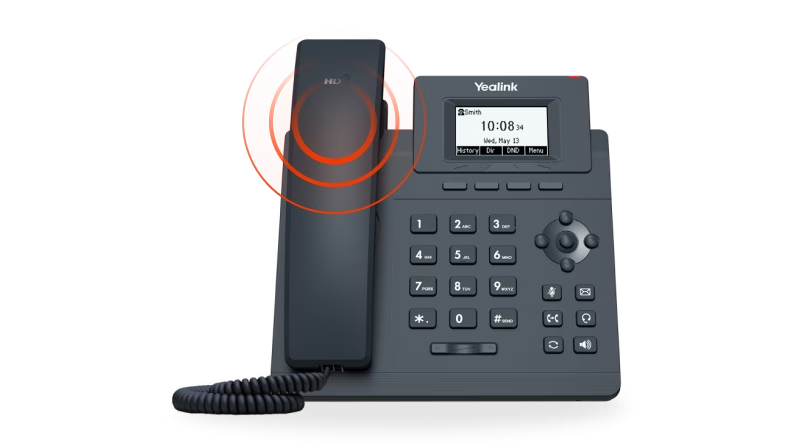

SMS to Email
Announcements
Voicemail to Email
Call Forwarding
Toll Free / Vanity Number
or call (844) 843-4175
MONEY BACK GUARANTEE
Free Desk Phone
Desktop & Mobile Apps
Local and Toll Free Numbers
Voicemail to Email
Text Messaging
Unlimited Calling
or call (844) 843-4174
MONEY BACK GUARANTEE

No Apps. No Texts. No Distractions.
No Strangers Allowed
Quiet Time Protected
Unlimited Calling
Emergency-Ready
or call (844) 843-4175
MONEY BACK GUARANTEE
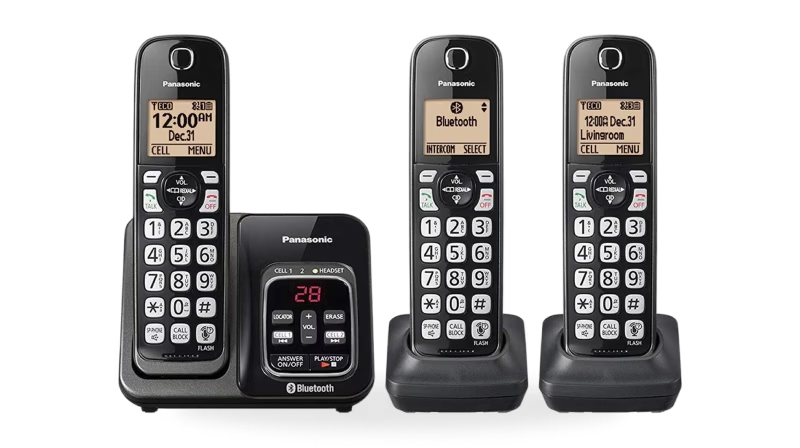
Unlimited phone service
Keep your existing number
Free adapter & free shipping
No contracts/setup fees
Use existing analog phone
or call (844) 843-4175
MONEY BACK GUARANTEE


Unlimited Phone Service
Keep Your Existing Number
Free Adapter, Free Shipping
No Contracts/Setup Fees
Use Existing Analog Phone
or call (844) 843-4175
MONEY BACK GUARANTEE
Desktop and Mobile App
Email To Fax
Dedicated Fax Number
Easily Fax Documents
No Contracts/Setup Fees
or call (844) 843-4175
MONEY BACK GUARANTEE
Flexible Plans
Everywhere Connectivity
High-Speed Internet on the Go
Reliable Internet Connection
Easy Setup and Access
or call (844) 843-4175