The phone on the side table has been there for decades. For many seniors, it feels like the most dependable thing in the house. But the service powering it has changed significantly in recent years, and it's worth understanding those changes before your next renewal or before your provider sends a notice about equipment upgrades.
Home phone service for seniors still works exactly the way you expect. You pick up, hear a dial tone, and dial. What's different is what's happening behind the scenes, and knowing those differences helps you ask better questions and avoid paying more than you should.
The Infrastructure Behind Traditional Landlines is Changing
For most of the 20th century, home phone service ran over copper telephone lines. That physical wire stretched from a telephone exchange directly to your home, and as long as it was intact, your phone worked. It even worked during a power outage, because the line carried its own low-voltage current.
The picture is more complicated now. The major carriers that once maintained those copper networks have been transitioning customers to newer technologies, including fiber-optic lines and internet-based phone systems. Some areas no longer offer traditional copper service. In others, providers have stopped supporting or repairing aging copper infrastructure, meaning outages take longer to resolve and service quality can be less consistent than it once was.
If you've received a notice from your phone provider about a required equipment upgrade or a service migration, this shift is likely the reason. It doesn't mean your phone will suddenly stop working. It means the technology running it is changing, and you may have choices to make about what replaces it.
What VoIP Phone Service Means for Seniors
VoIP stands for Voice over Internet Protocol. It's the technology most modern home phone services use to route calls over your internet connection instead of copper wires. The name sounds technical. The experience isn't.
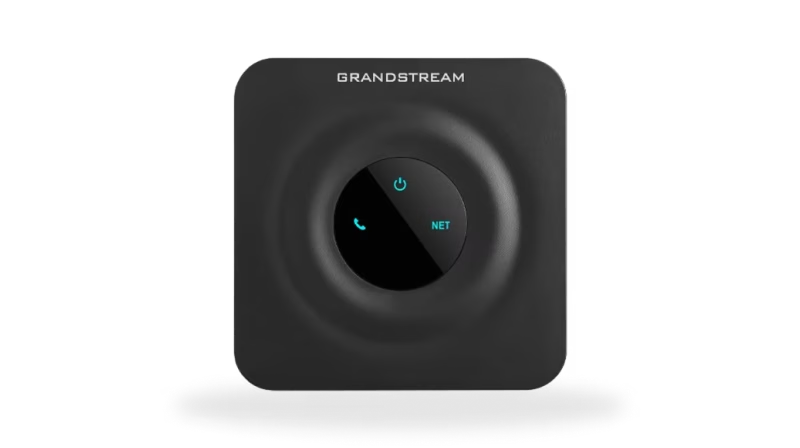
You plug a small adapter into your home internet router, then plug your existing phone into it. Within seconds, you have a dial tone. You make and receive calls exactly the way you always have. The phone on the table looks, feels, and works the same. The day-to-day experience of making and receiving calls doesn't change.
The difference shows up mostly in cost and features. Because calls travel over the internet rather than dedicated copper lines, VoIP home phone service providers can offer significantly lower monthly rates. Features like caller ID, voicemail, spam and fraud blocking, and call forwarding are typically included at no extra charge.
One important note about emergency calls: E911 service works through VoIP providers, but it operates differently from traditional landline 911. Your provider routes emergency calls based on a registered address on file with your account. That address needs to be up to date and accurate. You should register your address when you first set up service and update it any time you move, even temporarily. VoIP is not a guaranteed substitute for traditional landline service in all emergency situations, but when set up and registered correctly, it can support emergency calling.
What to Look For in a Home Phone Service
Not every home phone service is built the same way, and the features that matter most to seniors differ from what a business user might prioritize. A few things are worth focusing on when comparing options.
Set-up simplicity. The phone should work as soon as you connect the equipment. A good service ships an adapter that arrives pre-configured, meaning there's no software to install, no account to set up through a website, and no technician visit required. You simply plug it in, and it works.
Caller ID and name display. Knowing who's calling before you pick up has become more valuable as robocall and scam call rates have risen. This feature should be included at no extra charge and display the full caller name when available, not just the number.
Built-in robocall blocking. Blocking known spam numbers at the service level is much more effective than managing them one by one on your handset. Look for a provider that includes automatic call protection, ideally powered by a continuously updated database of known scam and spam numbers.
Voicemail to email. Standard voicemail works fine. Voicemail-to-email delivery, which sends you an audio file when someone leaves a message, makes it easier to listen and share without navigating a phone menu each time, or if you're away from home.
Accessible support. When something isn't working, you want to reach a real person quickly. Look for a provider with live phone support available when you need it, not just an email ticket system or an automated chat tool.
Home Phone Service Providers in 2026
The home phone market looks different in 2026 than it did just a few years ago. Here's a practical look at the most commonly available options for seniors, including what each one costs, how it works, and what to keep in mind before signing up. Pricing is approximate and subject to change, so confirm current rates directly with each provider.
Community Phone
Community Phone runs on wireless networks like T-Mobile 4G LTE, rather than copper wires or home internet, making it a practical choice for seniors who don't have broadband service or live in areas with inconsistent internet reliability.
Plans start around $36 to $40 per month. The base unit includes a 26-hour battery backup that keeps the phone running during power outages. Community Phone offers a multi-year price lock option, which can appeal to seniors on a fixed income who want predictable billing. No internet service is required.
AT&T
AT&T offers a traditional copper-based landline that works independently of your internet connection, including during power outages. That reliability has made it a long-standing choice for seniors who prioritize continuity during emergencies. Plans currently start around $58 to $72 per month, depending on the plan selected, putting it at the higher end of the market. AT&T also offers a Lifeline discount to eligible customers.
One significant limitation to note: as of 2026, AT&T's traditional landline service is available in only 21 states, and the company has been actively transitioning customers away from copper infrastructure. If you're a current AT&T landline customer or considering the service, it's worth confirming whether traditional service remains available at your address and for how long.
Verizon
Verizon offers a fiber-based home phone plan for around $30 per month, but it's only available as part of a bundle that also includes Verizon internet or TV service. The full package typically costs at least $80 per month, even with the slowest available internet plan.
For customers who already have Verizon internet or TV, adding phone service is a cost-effective option. For those who want only standalone phone service, the bundling requirement makes Verizon less competitive on price. Battery backup is available as an optional add-on for around $40, which is worth considering if emergency calling is a priority.
Consumer Cellular
Consumer Cellular is a wireless home phone service that operates on major cellular networks and has a longstanding partnership with AARP, offering a discount to members. Plans start around $20 per month. The service requires no contracts and is available without bundling.
Consumer Cellular is frequently recommended in senior-focused publications for its customer service accessibility and straightforward plan structure. As with any wireless-based home phone, call quality depends on cellular signal strength at your address, so it's worth checking coverage in your area before signing up. Before finalizing your plan, confirm that it includes features important to you.
Voiply
Voiply is a VoIP provider that routes calls over your existing internet connection. Plans start under $10 per month, making it one of the most affordable home phone options available. Setup is plug-and-play: an adapter ships to your door pre-configured, and you're up and running in minutes using your existing handset.
Features included at no extra charge include caller ID, voicemail-to-email, call forwarding, and Robocall Defender spam blocking. The service is BBB-accredited with an A rating and serves over 50,000 customers nationally. A home internet connection is required, and a battery backup for your router can keep you running during power outages.
Phone Systems Worth Considering
The service you choose determines how your calls get routed. The handset you use determines how they sound and feel. These three phone systems consistently rank among the best options for seniors in 2026 and are compatible with both VoIP and traditional landline services.
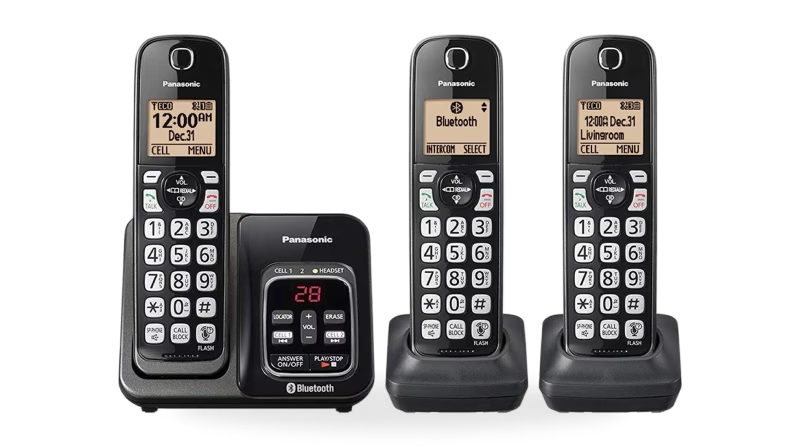
Panasonic KX-TGM420W
The KX-TGM420W is the most widely recommended cordless phone system for seniors. It offers adjustable sound amplification with a tone control that makes voices clearer rather than simply louder, which is a meaningful distinction for seniors with mild to moderate hearing loss.
A slow-speech playback feature lets you replay messages at reduced speed, which helps when callers speak quickly. The large backlit display and well-spaced buttons make dialing straightforward. The system expands to multiple handsets if you want a phone in more than one room. It is compatible with both VoIP adapters and traditional landline connections.
VTech SN5147
The SN5147 is built specifically for seniors who need amplified sound. It boosts incoming audio by up to 50 dB and includes an extra-loud ringer rated at 90 dB, which helps in larger homes or for seniors who frequently miss calls.
Photo dialing buttons on the base unit let you assign photos to eight frequently dialed numbers, removing the need to remember or look up contacts. A built-in smart call blocker can automatically filter many known robocall numbers and allows one-touch blocking of additional numbers. The system includes both a corded base and a cordless handset, giving you flexibility with where you use the phone.
Clarity E814CC
The E814CC is a good fit for seniors with more significant hearing loss. It amplifies incoming sound by up to 50 dB and includes adjustable tone settings that emphasize the high-frequency consonants that give speech its clarity, rather than simply raising overall volume.
The corded base unit is compatible with both traditional landlines and VoIP services. The oversized buttons and high-contrast display are easy to read, and the answering machine supports multiple mailboxes. Because it's corded, it can continue working during a power outage if you have a battery-powered internet router or a Community Phone base unit.
Keeping Your Number When the Technology Changes
One of the most common concerns seniors have when their phone service changes is losing a number they've had for 20 or 30 years. That number is in doctors' offices, pharmacies, with family members, and in address books going back decades. Updating it would mean notifying each of those contacts.
The good news is that number portability is a federal requirement for phone service providers in the United States. Any provider you choose must allow you to keep your existing number. The process is handled entirely by the new provider. In most cases, you just confirm that you want to keep your number, and they handle the transfer from your previous carrier. New phone service doesn't have to mean a new phone number.
When evaluating a new provider, ask specifically about their porting process. A well-managed transfer minimizes the work required from the customer and can often be completed with little or no interruption to incoming calls.
Your number can stay exactly what it's always been. The service running it simply changes underneath, and to everyone calling you, nothing is different.
A Phone Setup That Stays Out of the Way
The best home phone service does its job quietly. Calls come in, and you answer. Most known robocalls are filtered before they reach you. Voicemail is easy to check. The monthly bill arrives predictably, without any surprise fees.
For seniors, that reliability is more than a convenience. A home phone is often the first call made in a medical situation, the line caregivers rely on, and the number a family has used for years to stay in touch. It should work without requiring technical knowledge, ongoing maintenance, or frustration every time the provider makes a change.
Modern home phone service has made that more achievable. The technology behind it has shifted, but the experience of picking up the phone and making a call doesn't have to.
Disclaimer:
Pricing data reflects publicly available rates as of mid-2026 and is subject to change. Confirm current rates directly with each provider before signing up.
MONEY BACK GUARANTEE

SMS to Email
Announcements
Voicemail to Email
Call Forwarding
Toll Free / Vanity Number
or call (844) 843-4175
MONEY BACK GUARANTEE
Free Desk Phone
Desktop & Mobile Apps
Local and Toll Free Numbers
Voicemail to Email
Text Messaging
Unlimited Calling
or call (844) 843-4174
MONEY BACK GUARANTEE

No Apps. No Texts. No Distractions.
No Strangers Allowed
Quiet Time Protected
Unlimited Calling
Emergency-Ready
or call (844) 843-4175
MONEY BACK GUARANTEE
Unlimited phone service
Keep your existing number
Free adapter & free shipping
No contracts/setup fees
Use existing analog phone
or call (844) 843-4175
MONEY BACK GUARANTEE


Unlimited Phone Service
Keep Your Existing Number
Free Adapter, Free Shipping
No Contracts/Setup Fees
Use Existing Analog Phone
or call (844) 843-4175
MONEY BACK GUARANTEE
Desktop and Mobile App
Email To Fax
Dedicated Fax Number
Easily Fax Documents
No Contracts/Setup Fees
or call (844) 843-4175
MONEY BACK GUARANTEE
Flexible Plans
Everywhere Connectivity
High-Speed Internet on the Go
Reliable Internet Connection
Easy Setup and Access
or call (844) 843-4175