You may live in a world full of mobile phones with apps and text alerts, but schools, clinics, and local service providers still call home phones for a reason. A home phone provides a dependable shared contact point and supports communication that's easier to manage in real time.
If you have children in school, manage family appointments, or coordinate with local service providers, you have likely seen this firsthand. A school office may call to confirm an absence or communicate a time-sensitive change. Clinics call to confirm details or discuss next steps. Local services need a fast way to confirm timing and various details, and the list goes on. In all of those cases, a home phone often remains one of the most dependable ways to reach the household.
That is why home phone service still has a practical role in everyday life. It supports direct communication in situations where missed messages can create confusion or delay.
What Home Phones Offer That Mobile Phones Often Do Not
Mobile phones are extremely useful, but they also divide attention. Calls compete with text messages, app alerts, work notifications, and personal conversations happening on the same device.
A home phone creates a more focused communication channel. The household knows that when the phone rings, the call is more likely to involve something practical that needs attention. That separation can make important communication easier to notice and respond to calmly, especially when using a home phone service with a spam filter.
Home phones also support a more shared style of communication. Instead of routing every call through one individual, the household has a single, consistent place where important information can land.
Why Schools Still Value Calling Home Numbers
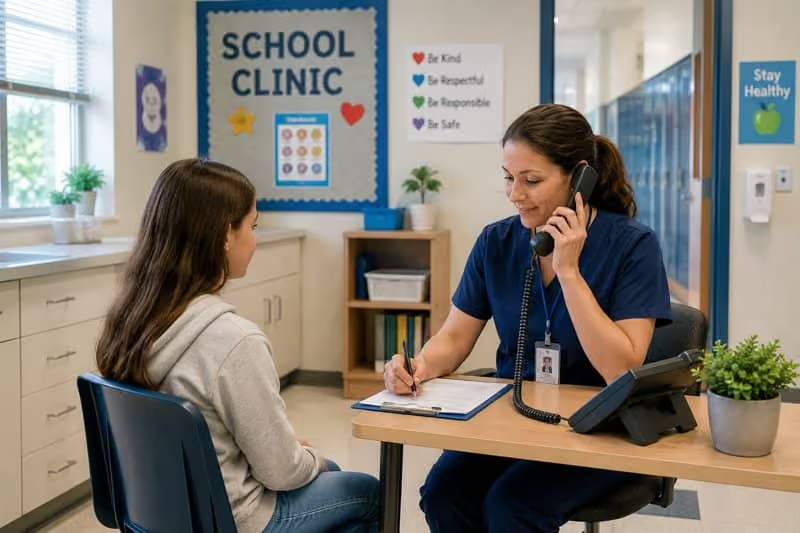
Schools often need direct communication that reaches the household quickly. Attendance questions, calls from the nurse, weather delays, and pickup changes are easier to handle when someone answers immediately instead of discovering a message later.
A home phone also aligns with how many families actually manage school responsibilities. One parent may handle scheduling, while the other handles transportation or after-school care. In some households, grandparents or other caregivers help coordinate the day. A shared household line supports that structure more naturally than relying on one personal device.
Schools also benefit from faster confirmation. A short phone conversation can clear up confusion immediately and help staff know the message reached the right person. That becomes especially valuable in time-sensitive situations, where waiting for a text reply can make things more stressful than they need to be.
Why Clinics Keep Using Home Phones
Medical communication often works best through direct contact. Appointment reminders, referral coordination, prescription questions, and follow-up instructions can involve details that are easier to explain in conversation than through voicemail or text alone. Medical offices often prefer direct conversations because sensitive questions can be handled more clearly.
A home phone can also support households with someone who helps manage another person's care. Parents often coordinate children's appointments, and many adults help aging parents or spouses manage schedules and medical information. In those situations, a shared household number can make communication more consistent and easier to organize.
For many older adults, home phones still feel familiar and comfortable. Many seniors prefer answering a traditional phone instead of navigating apps, notifications, or mobile settings. That familiarity can make medical communication feel simpler and less stressful overall.
Why Local Services Prefer a Direct Household Number
Local service providers spend much of the day coordinating timing. Delivery drivers, appliance repair teams, electricians, plumbers, and home maintenance companies often need quick answers while they're moving between appointments.
Those calls are usually operational rather than conversational. A technician may need gate access, parking instructions, confirmation that someone is home, or approval to arrive earlier than expected. Reaching the household quickly helps the day stay on schedule.
A home phone also works well because household responsibilities are often shared. The person who booked the appointment may not be the person home when the provider arrives. Calling the house gives service teams a better chance of reaching whoever can actually help in the moment. That reduces missed appointments, repeated callbacks, and the delays that can easily disrupt an entire service schedule.
Why This Still Matters in Busy Households
A lot of household coordination still happens across multiple people. One person schedules appointments, another handles school pickup, and someone else may be home for deliveries or service visits. Communication works more smoothly when the household has a shared point of contact.
A home phone can reduce many of the minor breakdowns that occur when important calls are tied to a single personal device. School updates are less likely to get missed during meetings. Service calls are easier to answer, even if the original contact is unavailable. Medical follow-ups are simpler to track when several family members help manage care responsibilities.
For busy families, that kind of reliability still has practical value. A shared phone line can make everyday coordination feel more organized and less fragmented.
How Modern Home Phone Service Fits That Role
The role of the home phone has stayed familiar even as the service behind it has changed. People still want a familiar, dependable way to handle important household communication. The difference now is that modern home phone service providers can make that experience more flexible and easier to manage.
Today's services can offer clearer call quality, more flexible account management, call forwarding options, and tools that help households stay reachable more consistently. The goal isn't to replace the familiar experience of a home phone. It's to preserve what already works while making the service itself fit modern life more smoothly.
If your household still gets calls from schools, clinics, and local providers, a home phone remains a practical tool. It gives those organizations a reliable way to reach you, and it gives your family one place where important calls still land clearly.
MONEY BACK GUARANTEE

SMS to Email
Announcements
Voicemail to Email
Call Forwarding
Toll Free / Vanity Number
or call (844) 843-4175
MONEY BACK GUARANTEE
Free Desk Phone
Desktop & Mobile Apps
Local and Toll Free Numbers
Voicemail to Email
Text Messaging
Unlimited Calling
or call (844) 843-4174
MONEY BACK GUARANTEE
No Apps. No Texts. No Distractions.
No Strangers Allowed
Quiet Time Protected
Unlimited Calling
Emergency-Ready
or call (844) 843-4175
MONEY BACK GUARANTEE
Unlimited phone service
Keep your existing number
Free adapter & free shipping
No contracts/setup fees
Use existing analog phone
or call (844) 843-4175
MONEY BACK GUARANTEE


Unlimited Phone Service
Keep Your Existing Number
Free Adapter, Free Shipping
No Contracts/Setup Fees
Use Existing Analog Phone
or call (844) 843-4175
MONEY BACK GUARANTEE
Desktop and Mobile App
Email To Fax
Dedicated Fax Number
Easily Fax Documents
No Contracts/Setup Fees
or call (844) 843-4175
MONEY BACK GUARANTEE
Flexible Plans
Everywhere Connectivity
High-Speed Internet on the Go
Reliable Internet Connection
Easy Setup and Access
or call (844) 843-4175