Signing up for home internet shouldn't take weeks. But for many households, that's exactly what happens. You schedule a technician, clear your calendar, and wait through a four-hour appointment window, only to end up with a router plugged into a wall jack that hasn't been touched in years. Cable and DSL internet can work well once it's running, but getting there involves more friction than most people expect.
5G home internet takes a different approach. There's no technician, no wiring, and no long wait before you're connected. You receive a gateway device, plug it in, and you're online. For homes where the traditional setup process has been a persistent source of frustration, that difference is an attractive one.
The Friction Behind a Traditional Installation
The friction in traditional internet installation starts before anyone shows up. First, you need to schedule an appointment. Depending on your provider and location, that window could be days or weeks out. Then you coordinate access, make sure someone is home for the full appointment, and hope the technician can complete the work in a single visit.
Once the installation happens, your connection depends on the physical line running into your home. Cable internet uses coaxial cable. Digital Subscriber Line (DSL) travels over telephone lines, many of which were built decades ago. When those lines corrode or are damaged by a storm, your connection suffers. Restoring service then means another technician visit and another wait. Even when demand spikes, your connection slows or drops. You're dependent on a system that runs through your walls and under your street, maintained on someone else's schedule.
For renters, the process gains yet another layer. You may need landlord approval before a technician can drill or run cable through the walls. In older buildings, existing wiring may be outdated, which can limit speed or require additional work before service is up and running.
Many traditional internet service providers (ISPs) also require contract commitments. Moving before the contract ends can mean early termination fees. You also can’t just choose to switch providers when you're locked in for one or two years. That structure favors the ISP, not you.
How 5G Home Internet Changes the Setup
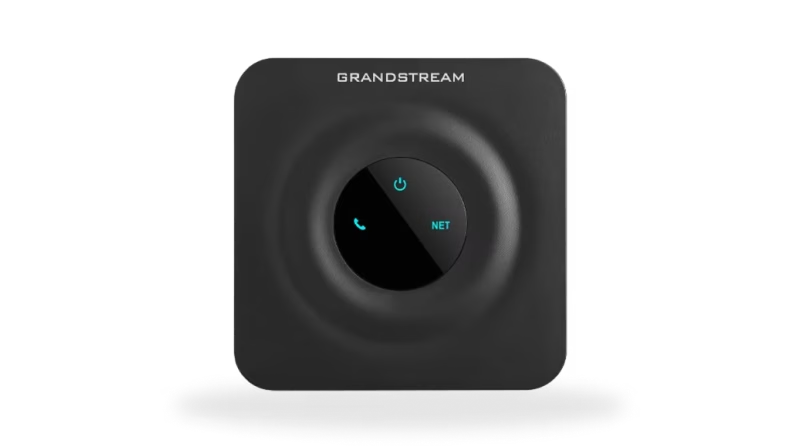
5G home internet replaces the wired infrastructure with a wireless signal. Instead of coax or phone lines, a cellular connection handles the data. You receive a gateway device that connects to the 5G network the same way a smartphone does. You plug it in, place it near a window for the best signal, and your home network is live.
There's no drilling. No wall plates. No technician scheduling. The setup typically takes under 15 minutes, and the only cable involved is the one that powers the device.
It also means your connection doesn't depend on the condition of lines you can't see. A 5G signal doesn't corrode or sustain water damage. When a storm takes out a nearby cable node, your internet may continue to run because it doesn't use that physical path. That's not a guarantee against every outage, but it removes one of the most common causes.
Older homes may benefit even more. In properties where coaxial cable only reaches a few rooms, or where phone line quality has degraded over time, a 5G gateway placed near a window can deliver a connection that aging infrastructure simply can’t.
Why Homes With Limited ISP Options Benefit Most
Cable internet is widely available in suburban and urban areas, but its footprint shrinks quickly outside those zones. Rural homes often face a short list of options: DSL at limited speeds, satellite internet with high latency, or, in some areas, nothing at all from a traditional wired provider.
For many rural homes, unlimited 5G internet represents a practical alternative. Where cellular coverage is strong, 5G home internet can deliver speeds that match or exceed those of DSL, without the delays and infrastructure requirements of a wired connection. There's no trench to dig and no coax to run to the property. The wireless signal does the work, and the setup is the same whether the home is in a suburb or on a rural road.
The pricing model tends to be more predictable as well. Traditional ISPs in areas with limited competition sometimes charge more for slower service, knowing customers have few alternatives. 5G home internet introduces another option into that equation. If you’ve been paying for slow DSL because nothing better was available, 5G coverage in your area can change that.
One point worth stating clearly: 5G home internet works where the signal is strong. Coverage varies by location, and results in a low-signal area won't match those in a strong one. Check your address against a provider's coverage map before switching.
What 5G Handles Well for Everyday Use
For most households, daily internet use comes down to a few core activities: streaming video, video calls, browsing, and voice-over-internet phone service. These tasks don't require the highest speeds available. They rely more on a consistent connection that doesn't stutter or drop.
Streaming in high definition doesn't demand enormous bandwidth, and most 5G connections deliver well above the threshold for smooth playback. Video calls are similarly modest in their requirements. A stable connection with reliable upload speeds produces a clear call. Speed tier matters less than consistency.
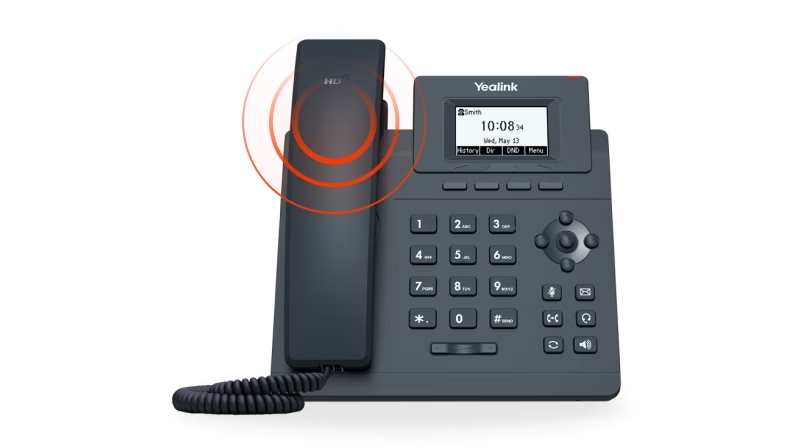
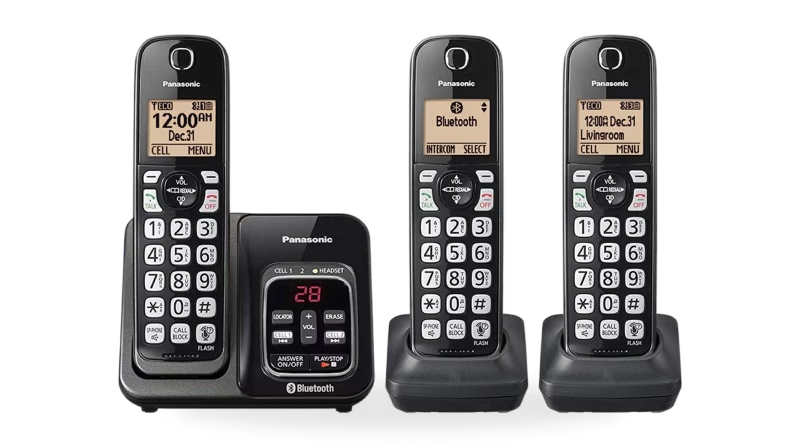
Voice over Internet Protocol (VoIP) phone service can be a powerful tool for 5G home internet setups. VoIP calls use very little data, but they're sensitive to instability. A connection that drops for two seconds mid-call is more disruptive than one that slows briefly during a file download. In areas where traditional phone landlines have been discontinued or are unreliable, VoIP over a 5G connection can restore home phone service without requiring any new infrastructure.
A Simpler Starting Point for Home Internet
The appeal of 5G home internet isn't merely speed or pricing. It's the removal of steps that make getting connected harder than it needs to be. No technician. No appointment window. No dependency on wiring that runs through walls and underground.
If you’ve dealt with the full traditional installation process, especially in an area where cable never quite reached, 5G is worth looking into. A wireless connection can give you greater flexibility with easier setup and address many of the weak points of traditional wired internet. It also pairs naturally with a VoIP home phone service, keeping your setup simple and your services under one provider.
The best home internet setup isn't necessarily the one with the fastest advertised speed or the most elaborate infrastructure. It's the one that delivers the performance your household needs without creating extra work just to keep it running. For many homes, 5G offers a simpler way to get there.
MONEY BACK GUARANTEE

SMS to Email
Announcements
Voicemail to Email
Call Forwarding
Toll Free / Vanity Number
or call (844) 843-4175
MONEY BACK GUARANTEE
Free Desk Phone
Desktop & Mobile Apps
Local and Toll Free Numbers
Voicemail to Email
Text Messaging
Unlimited Calling
or call (844) 843-4174
MONEY BACK GUARANTEE

No Apps. No Texts. No Distractions.
No Strangers Allowed
Quiet Time Protected
Unlimited Calling
Emergency-Ready
or call (844) 843-4175
MONEY BACK GUARANTEE
Unlimited phone service
Keep your existing number
Free adapter & free shipping
No contracts/setup fees
Use existing analog phone
or call (844) 843-4175
MONEY BACK GUARANTEE


Unlimited Phone Service
Keep Your Existing Number
Free Adapter, Free Shipping
No Contracts/Setup Fees
Use Existing Analog Phone
or call (844) 843-4175
MONEY BACK GUARANTEE
Desktop and Mobile App
Email To Fax
Dedicated Fax Number
Easily Fax Documents
No Contracts/Setup Fees
or call (844) 843-4175
MONEY BACK GUARANTEE
Flexible Plans
Everywhere Connectivity
High-Speed Internet on the Go
Reliable Internet Connection
Easy Setup and Access
or call (844) 843-4175