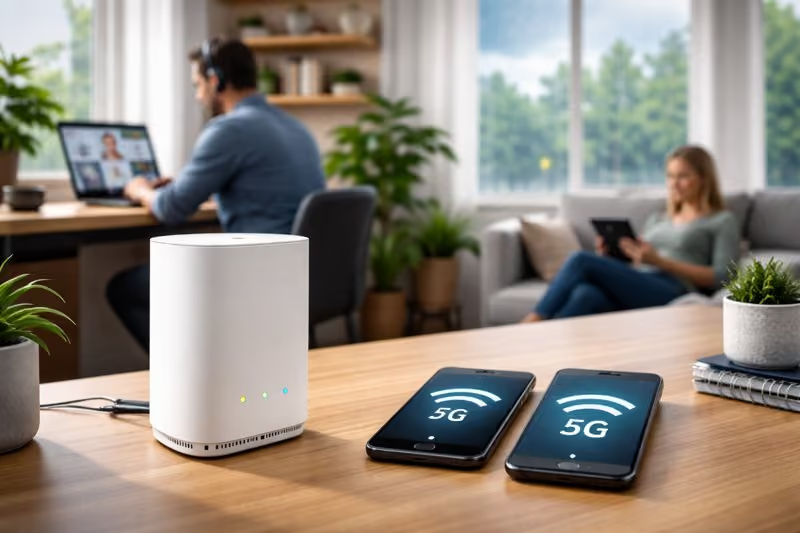
When your home internet goes down, it rarely feels like a small inconvenience. Your video calls drop, streaming stops mid-scene, smart devices disconnect, and work tasks stall. If you rely on internet calling, even basic communication can get disrupted. You can try some basic troubleshooting, but all too frequently, you just have to wait it out.
5G home internet with multi-carrier coverage aims to reduce those moments by giving you more than one network to rely on. Instead of depending on a single cellular carrier, the connection can switch between networks when one becomes slow or cuts out, helping you stay online more consistently.
Why Home Internet Outages Happen
You can have solid internet most days and still deal with unexpected outages. Congestion is one of the biggest causes.When too many people in your area are online at the same time, speeds can dip,causing buffering and long loading times.
Weather is another common trigger. Heavy storms can affect local infrastructure, leading to slowdowns or temporary outages.Even if your home equipment is fine, your connection may still struggle if the network outside your home is under stress.
Sometimes the issue is simply a local disruption. Regular maintenance or unexpected equipment problems can knock service offline. While you can sometimes plan around these interruptions,there's nothing you can do to prevent them.
What Multi-Carrier 5G Does for Your Internet
Multi-carrier 5G internet gives your home connection more than one option. Instead of relying on a single carrier's network, your service can choose from multiple cellular networks and use whichever one is performing best at the moment.
When one network slows down or drops temporarily, the connection can move to another available network. The goal is consistency. Multi-carrier internet can stay online more often because it's not tied to a single point of failure.
Think of it like having more than one road out of your neighborhood. If one route gets backed up, you can take another. You get to where you need to go and spend less time stuck waiting.
How Automatic Switching Helps You Stay Online
The biggest benefit of multi-carrier 5G is automatic switching. If your connection starts to lag because one network is congested, the system can automatically switch to a stronger option. You may not even notice it happening, which is exactly the point.
Automatic switching can make a noticeable difference during peak hours. If your neighborhood tends to slow down in the evenings when everyone is streaming, your internet can quietly shift to a less-burdened network. From your perspective, the internet likely just continues to work as if nothing happened. In reality, you may be dodging a massive lag spike.
It also helps during unexpected disruptions.If a carrier has a temporary issue in your area, a single-carrier setup can leave you offline until that carrier recovers. Multi-carrier setups reduce that risk by keeping another network available as a backup.
How Multi-Carrier Helps With Reliability During Bad Weather
Congestion is predictable in many areas. You may notice the same slowdowns at the same times each day. Bad weather is less predictable, and that's where backup options matter.
A storm can affect different networks indifferent ways. If one carrier is struggling, another may still be performing well enough to keep you connected. That flexibility can be the difference between staying online and losing service for hours.
Your connection may not be perfect, but you'll be far more likely to have a connection in the first place. When your internet is under stress, a connection with options tends to hold up better and recover faster.
How Multi-Carrier Internet Keeps Your Day Moving Smoothly
Your home internet supports the backbone of your daily life, especially if you work from home or manage a busy household.When your connection stays stable, you can move through your day without constant resets and restarts.
Streaming becomes smoother because you're less likely to hit sudden buffering or quality drops. Remote work becomes easier because your meetings have fewer glitches and your files upload more consistently. Smart home devices also benefit because they rely on a constant connection to stay responsive.
If you use a home VoIP phone service, reliability becomes even more important. Dropped connections and unstable speeds can affect call clarity and consistency. A steadier connection supports better calling quality and fewer interruptions.
What to Look For If You're Considering Multi-Carrier 5G
If you're exploring multi-carrier 5G internet,focus on the basics that affect real performance and day-to-day ease of use. A couple of things are worth checking:
- Coverage in your area. Multi-carrier helps because it can access multiple networks, but it's still subject to each network's coverage. If your home has at least one dependable carrier signal, multi-carrier options can add stability.
- Transparent expectations. Reliability improves when you have multiple networks available, but performance can still vary based on local conditions. A good provider sets clear expectations and helps you understand what variations you may see.
How a More Stable Connection Changes Your Day
The best internet connection is the one that you don't have to think about. Multi-carrier 5G supports a more reliable home setup, keeping you online more consistently. It can also save you time. Less troubleshooting means fewer resets, fewer frustrated support calls, and fewer moments of waiting for service to come back. That time adds up, and so does the peace of mind that comes with internet service you can actually count on.
MONEY BACK GUARANTEE
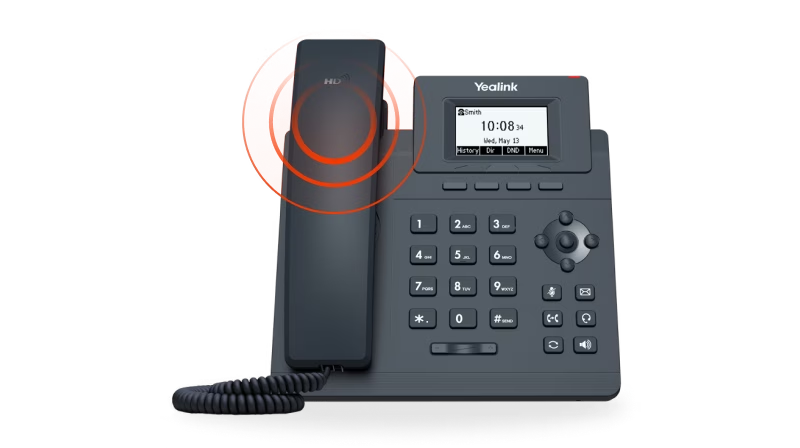

SMS to Email
Announcements
Voicemail to Email
Call Forwarding
Toll Free / Vanity Number
or call (844) 843-4175
MONEY BACK GUARANTEE
Free Desk Phone
Desktop & Mobile Apps
Local and Toll Free Numbers
Voicemail to Email
Text Messaging
Unlimited Calling
or call (844) 843-4174
MONEY BACK GUARANTEE

No Apps. No Texts. No Distractions.
No Strangers Allowed
Quiet Time Protected
Unlimited Calling
Emergency-Ready
or call (844) 843-4175
MONEY BACK GUARANTEE
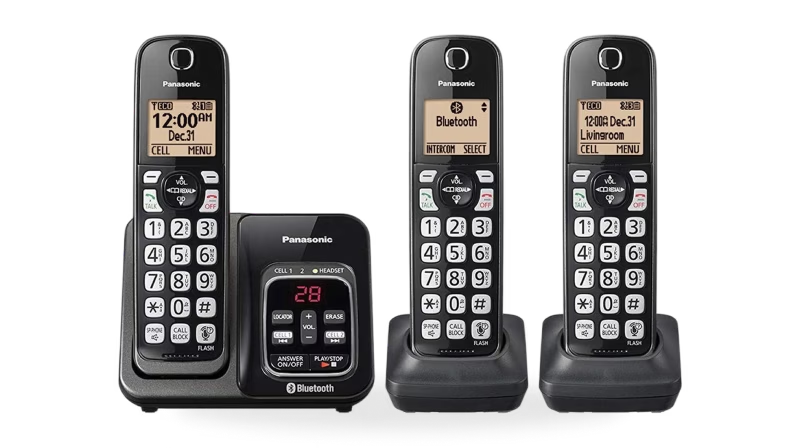
Unlimited phone service
Keep your existing number
Free adapter & free shipping
No contracts/setup fees
Use existing analog phone
or call (844) 843-4175
MONEY BACK GUARANTEE


Unlimited Phone Service
Keep Your Existing Number
Free Adapter, Free Shipping
No Contracts/Setup Fees
Use Existing Analog Phone
or call (844) 843-4175
MONEY BACK GUARANTEE
Desktop and Mobile App
Email To Fax
Dedicated Fax Number
Easily Fax Documents
No Contracts/Setup Fees
or call (844) 843-4175
MONEY BACK GUARANTEE
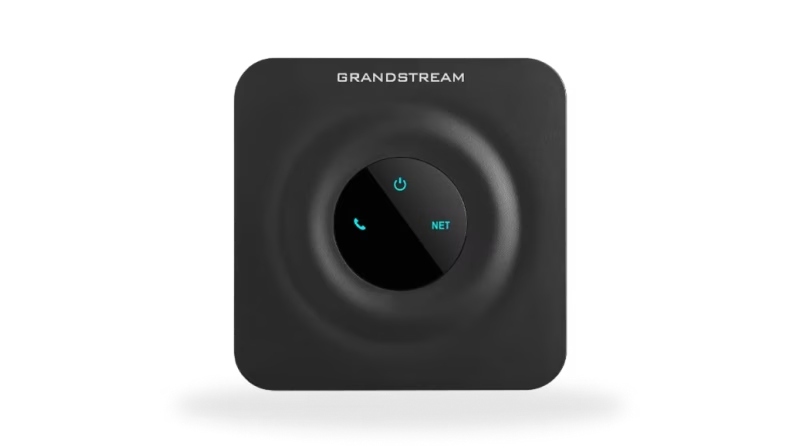
Flexible Plans
Everywhere Connectivity
High-Speed Internet on the Go
Reliable Internet Connection
Easy Setup and Access
or call (844) 843-4175