
For years, home internet and phone service could mostly be judged by whether they handled everyday use without getting in the way. Home Internet was responsible for streaming, browsing, and occasional video calls, while phone service handled calls. It was simple, and neither was pushed to its limits very often. Then, remote work became routine, and the expectations changed completely.
A connection that worked well enough for personal use often struggled under the demands of a full workday. In this new ecosystem, stability, audio quality, and sustained uptime matter as much as raw speed. Home internet and phone service have stopped being background infrastructure and started being the job itself.
Speed Isn't the Whole Story
The first instinct for most households making the shift to remote work has been to upgrade their internet plan's speed. For many, that logic holds, but it only addresses part of the problem.
Remote work doesn't require enormous bandwidth for most tasks. A video call uses a fraction of the data that 4K streaming does. A cloud-based application or shared document depends only lightly on raw download speed. A virtual private network (VPN) connection adds overhead but doesn't require the bandwidth a high-definition file download does.
What remote work actually demands is a connection that behaves consistently throughout the day. Stable internet helps prevent brief, even momentary interruptions from disrupting a video call, interrupting a presentation, or forcing an application to reconnect.
Lower latency becomes important when you're working in the cloud or communicating in real time, where delays can make calls feel choppy and applications feel sluggish. Neither of these is tied to the fastest available plans. Remote work doesn’t need those speeds; it simply needs a connection that stays responsive and dependable when you need it.
Having multiple devices on a single connection compounds the challenge. Laptops, phones, tablets, smart speakers, and home security systems all share bandwidth. When the household is fully occupied, that shared load can destabilize even a fast plan. In those situations, the question needs to shift from "how fast is the plan" to "how reliably does the connection handle sustained, simultaneous use."
When Internet Problems Become Professional Problems
For personal use, a dropped internet connection is an inconvenience. During a workday, that same drop can interrupt a client presentation, cut off a job interview, or break a call with a manager trying to resolve an urgent issue.
The stakes are higher now. A connection that performs well enough for casual use may not perform well enough for work. Because home internet infrastructure is shared at the neighborhood level, occasional problems can become more noticeable during business hours, when congestion is highest, and the cost of downtime is real.
Many remote workers quickly notice the gap between their plan’s features and its practical reliability. A plan advertised as high-speed can still produce frozen video feeds and broken collaboration tools when local network conditions degrade. An outage lasting two hours in the middle of a workday can mean time off the clock, a missed deadline, or a rescheduled meeting.
Phone Service That Works with How You Work
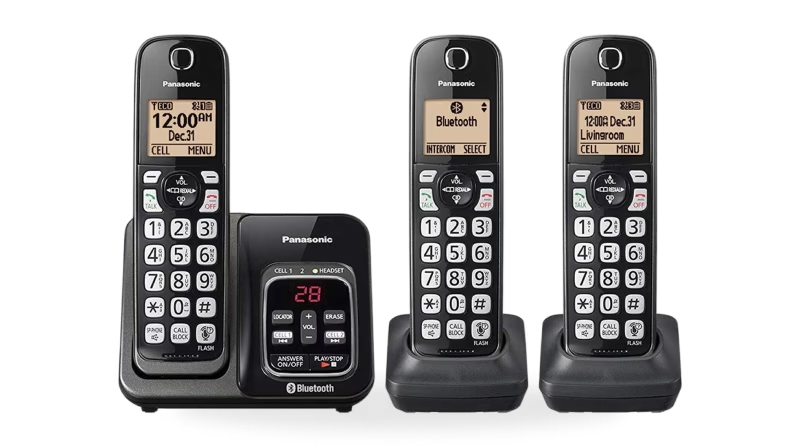
For households relying on a home phone setup for business calls, the reliability and audio quality of that line become as important as internet connectivity. Mobile devices don’t always have the stability or quality to meet professional demands, including client calls, internal meetings, conference lines, and personal conversations throughout the day.
For remote workers, the biggest issue is often separation. Work calls need to be easy to recognize, answer, and manage without taking over the rest of the household's communication.
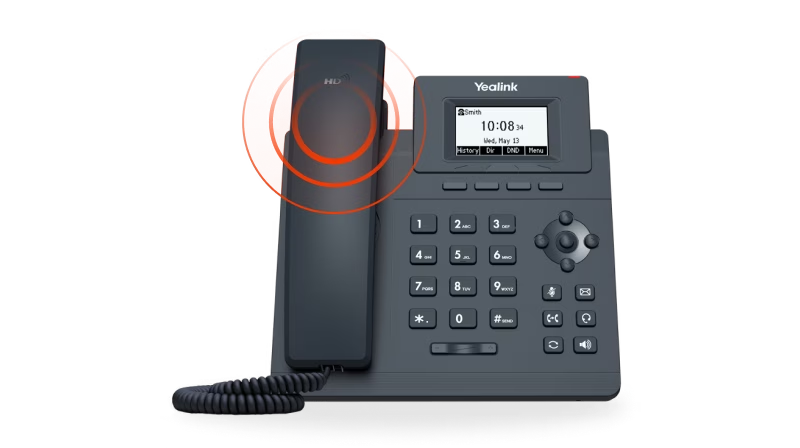
Voice over Internet Protocol (VoIP) can answer that call, giving remote workers more flexibility in how they use that line while still functioning as a separate line with its own number. VoIP relies on broadband internet connection rather than analog copper phone lines, but it isn't limited by certain things that limit mobile phones.
For example, when you use a home VoIP phone service for remote work, the same phone number can work across different devices, allowing you to take a call at your desk in the morning and answer it on a laptop later without changing the number or manually forwarding calls. The line follows the work, not the device.
VoIP can help with a different problem, too. In homes where cellular reception is weak in certain rooms, calls can use the home's Wi-Fi connection instead of relying entirely on the cellular signal. That can make conversations more reliable in places where a cell phone struggles.
Clear audio also makes a big difference. A call with muffled sound, high latency, or frequent clipping creates friction in every conversation. Clients notice. Colleagues notice. For remote workers whose voice is one of their primary tools, phone service that consistently delivers clean calls isn't optional.
When a Backup Internet Connection Becomes Essential
A remote worker who loses their internet connection loses their ability to work. For households where the internet is the home office, a few-hour outage isn't an inconvenience. It's an unplanned absence.
Traditional internet setups over cable or digital subscriber line (DSL) are vulnerable to physical infrastructure failures. A cut line, a flooded node, or storm damage to local equipment can take service offline until a technician resolves the problem. That timeline is outside of your control.
For remote workers, unlimited 5G internet has become a practical response to that vulnerability. A 5G gateway or mobile hotspot runs on a different infrastructure path than a wired connection. When the cable goes down, the 5G signal doesn't share that failure point. Remote workers with both a primary wired connection and a 5G backup have a fallback that activates without waiting for a repair crew.
For some households, especially in areas where cable service is unreliable or unavailable, 5G can serve as the primary connection rather than the backup. The setup is faster than a traditional installation, and the performance handles the steady demands of remote work well when coverage is consistent. The key question is signal strength at your specific address, which a quick coverage check can confirm before you commit to anything.
Reliability Is the New Baseline
Remote work changes which technology features matter most. Speed is measurable and marketable, but there's no substitute for stability.
Households adapting well to full-time remote work are usually the ones asking different questions. Not how fast the plan is, but whether it holds up during peak hours. Not whether the phone has good call quality in ideal conditions, but whether it stays clear across a two-hour call. Not whether the internet is sufficient, but whether there is a backup for when it isn't.
MONEY BACK GUARANTEE

SMS to Email
Announcements
Voicemail to Email
Call Forwarding
Toll Free / Vanity Number
or call (844) 843-4175
MONEY BACK GUARANTEE
Free Desk Phone
Desktop & Mobile Apps
Local and Toll Free Numbers
Voicemail to Email
Text Messaging
Unlimited Calling
or call (844) 843-4174
MONEY BACK GUARANTEE

No Apps. No Texts. No Distractions.
No Strangers Allowed
Quiet Time Protected
Unlimited Calling
Emergency-Ready
or call (844) 843-4175
MONEY BACK GUARANTEE
Unlimited phone service
Keep your existing number
Free adapter & free shipping
No contracts/setup fees
Use existing analog phone
or call (844) 843-4175
MONEY BACK GUARANTEE


Unlimited Phone Service
Keep Your Existing Number
Free Adapter, Free Shipping
No Contracts/Setup Fees
Use Existing Analog Phone
or call (844) 843-4175
MONEY BACK GUARANTEE
Desktop and Mobile App
Email To Fax
Dedicated Fax Number
Easily Fax Documents
No Contracts/Setup Fees
or call (844) 843-4175
MONEY BACK GUARANTEE
Flexible Plans
Everywhere Connectivity
High-Speed Internet on the Go
Reliable Internet Connection
Easy Setup and Access
or call (844) 843-4175