If you live or work on a farm, communication has to be simple and dependable. Cellular connections may be unreliable in rural areas, and callers need to reach the farm itself, not necessarily any one person. In that kind of environment, a home phone still serves a real purpose.
A home phone service gives you a single, stable number for your farm. Neighbors know it. Suppliers know it. Veterinarians, feed stores, mechanics, and family members know it. A missed call can slow down a repair, delay a delivery, or leave you chasing information you needed an hour ago.
For these and other reasons, many farmers still keep a home phone even while using mobile devices every day. The difference now is that modern phone service can support the same familiar routine with a bit more flexibility.
Where Cell Phones Fall Short on a Farm
Cell phones are essential, but they come with limits in a farm setting. They get left behind in trucks or machinery, run out of battery charge, and depend on signal strength that can change across the property. Even when everything is working, a cell phone still belongs to one person, which means calls can be missed when that person is unavailable.
That creates gaps in communication. When everything runs through a single number, any disruption affects the entire operation. A home phone fills that gap by keeping a stable number tied to the property. It supports how farm communication actually works, without relying on one person to carry the burden of every call.
Home Phones Keep Contact Simple
A lot of farm communication still happens through direct calls. You call to check on parts. You call to confirm a delivery. You call to see if someone can come out for a repair. You call a neighbor when the weather changes or the equipment goes down. In many farming communities, that directness still works better than juggling apps or waiting on replies.
A home phone fits those habits because it keeps calling simple. You pick up, dial, talk, and move on. There is no extra layer of distraction. You are not sorting through notifications or wondering if the important call got mixed in with everything else on your mobile device.
A Steady Point of Contact
Farm work does not happen in one place, and it does not follow a fixed routine. You move between various fields, buildings, and equipment throughout the day. In that kind of environment, a home phone creates a steady point of contact. It gives people one reliable number to reach the farm itself.
That consistency also supports shared use. If more than one person helps manage the property, a home phone keeps communication from being tied to a single personal device. That makes everyday coordination easier and reduces the chance that important calls get buried under personal texts and app alerts.
How VoIP Supports Modern Farming
What Is VoIP?
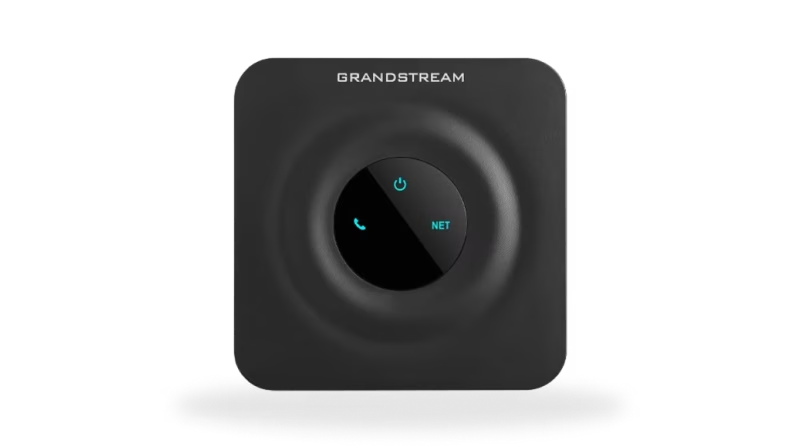
VoIP (Voice over Internet Protocol) is a type of phone service that runs through your internet connection instead of traditional phone lines. On the surface, it works like a normal home phone. The difference is in how the service is delivered.
One Number, Anywhere
Farm households need a phone system that aligns with how the property actually operates. That usually means one consistent number, clear calls, and a setup that works across multiple buildings with more than one person involved. VoIP supports that by keeping the structure familiar while adding simple improvements behind the scenes.
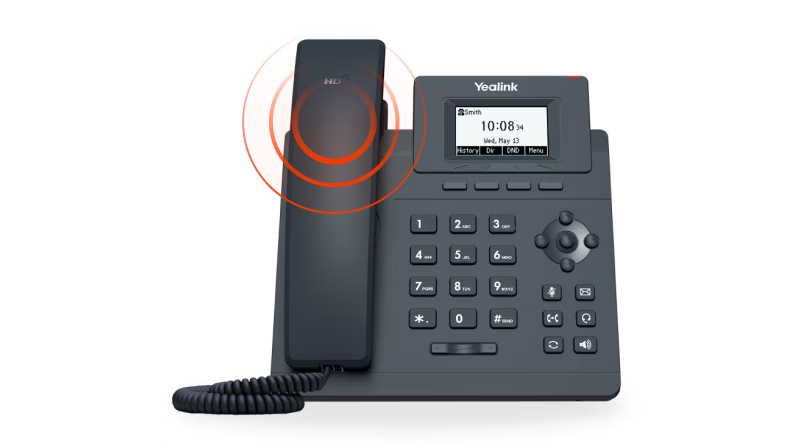
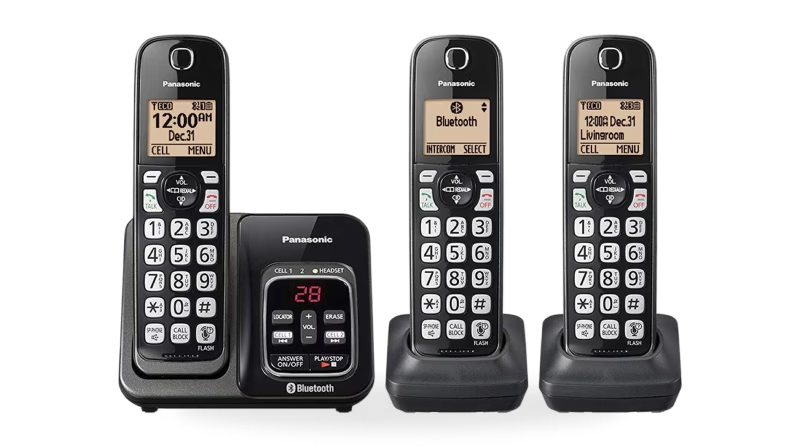
You can keep one main farm number and have it ring multiple phones around the house or shop, which makes it easier to catch calls during a busy day. If you step away from the house, calls can also reach a mobile device without replacing the home phone itself. Multiple handsets can connect to the same line, and the system remains simple enough for anyone in the household to use. These extra ways to use the line make VoIP one of the most flexible types of home phone plans.
Simple Pricing
Despite the extra features, many rural VoIP home phones are budget-friendly. Because VoIP does not rely on older line infrastructure, it tends to be simpler and more predictable in terms of cost. Many plans come with straightforward monthly pricing, typically without the layers of added fees that often show up on traditional phone bills.
Keeping the Farm Reachable Without Complication
Cell phones may be useful, but they don’t meet some of the long-standing needs of farm communication. You still need a reliable number for your property. You still depend on direct calls to keep work moving. And you still need a setup that works for more than one person across multiple buildings and long days.
However, the way that service can be delivered has evolved. A VoIP home phone retains the role of a traditional home phone while removing many of the limitations of older systems. You get the same steady point of contact, but with more flexibility in how calls are handled and fewer surprises in how the service is priced.
That makes the decision simpler. If you need something dependable, a home phone still makes sense. If you want more flexibility in that system while preserving the simplicity, VoIP is a natural fit.
MONEY BACK GUARANTEE

SMS to Email
Announcements
Voicemail to Email
Call Forwarding
Toll Free / Vanity Number
or call (844) 843-4175
MONEY BACK GUARANTEE
Free Desk Phone
Desktop & Mobile Apps
Local and Toll Free Numbers
Voicemail to Email
Text Messaging
Unlimited Calling
or call (844) 843-4174
MONEY BACK GUARANTEE

No Apps. No Texts. No Distractions.
No Strangers Allowed
Quiet Time Protected
Unlimited Calling
Emergency-Ready
or call (844) 843-4175
MONEY BACK GUARANTEE
Unlimited phone service
Keep your existing number
Free adapter & free shipping
No contracts/setup fees
Use existing analog phone
or call (844) 843-4175
MONEY BACK GUARANTEE


Unlimited Phone Service
Keep Your Existing Number
Free Adapter, Free Shipping
No Contracts/Setup Fees
Use Existing Analog Phone
or call (844) 843-4175
MONEY BACK GUARANTEE
Desktop and Mobile App
Email To Fax
Dedicated Fax Number
Easily Fax Documents
No Contracts/Setup Fees
or call (844) 843-4175
MONEY BACK GUARANTEE
Flexible Plans
Everywhere Connectivity
High-Speed Internet on the Go
Reliable Internet Connection
Easy Setup and Access
or call (844) 843-4175